
Which Sonicare toothbrush head should you choose?
A straightforward comparison of five genuine Philips Sonicare heads—from everyday cleaning and stain removal to sensitive teeth and premium all-in-one care.
Reviewed 8 September 2026 · Ireland edition
The letters on Sonicare heads are useful once you know the code: C is primarily about cleaning and plaque, W focuses on surface stains, S prioritises gentleness, and A combines several goals. The right choice is usually the head you find comfortable enough to use thoroughly, twice a day—not automatically the most expensive one.
First, check compatibility
Most rechargeable Sonicare handles use Philips’ standard click-on fitting, and all five heads below use that system. They are not the right choice for older screw-on Essence handles or Philips One brushes, which use different heads. If your current head pulls straight off the handle, it is probably click-on; if you are uncertain, check the model number printed on the base of your toothbrush.
Product images link to Amazon.ie · paid links
| Head | Primary purpose | Bristle feel | Best suited to |
|---|---|---|---|
 C1 ProResults C1 ProResults |
Everyday plaque removal | Medium-soft | A straightforward genuine replacement |
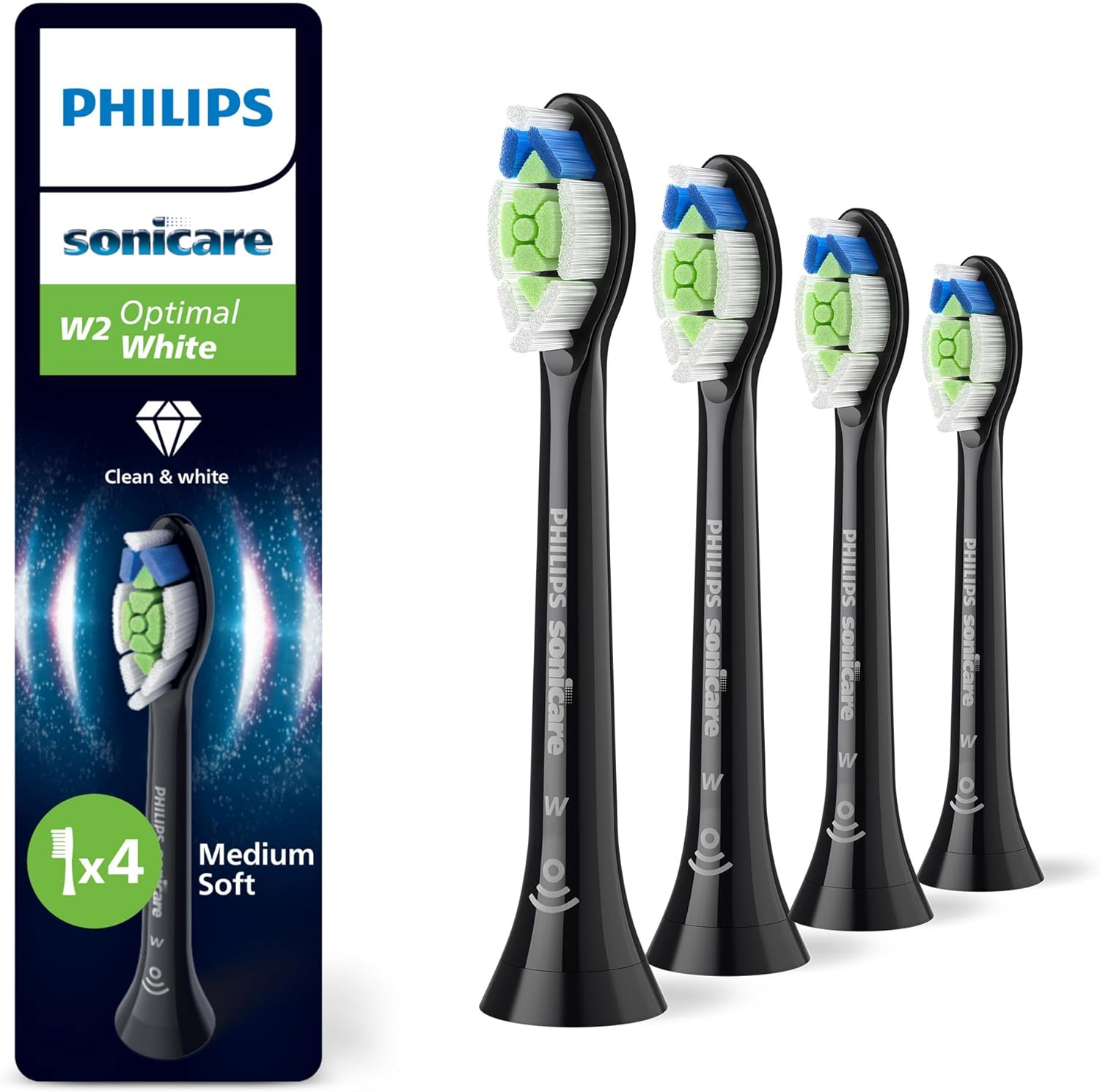 W2 Optimal White W2 Optimal White |
Plaque plus surface stains | Medium-soft | Tea, coffee or tobacco staining at the surface |
 C3 Premium Plaque Defence C3 Premium Plaque Defence |
Premium plaque-focused clean | Medium-soft, flexible sides | People who want greater surface contact |
 S2 Sensitive S2 Sensitive |
Gentle cleaning | Extra-soft | Those who find standard heads uncomfortable |
 A3 Premium All-in-One A3 Premium All-in-One |
Plaque, stains and gumline care | Soft, flexible sides | A premium general-purpose head |
Best simple everyday choice
C1 ProResults
C1 is the sensible baseline: a standard-size genuine head without the flexible rubber surround or specialist bristle pattern of the premium models. Choose it if you want a familiar everyday clean and would rather spend less than you would on C3 or A3. It is also a useful reference point—if C1 feels comfortable and you are cleaning effectively, there may be no need to upgrade.
Best for surface-stain focus
W2 Optimal White
W2 uses a denser central stain-removal area and is intended for people who want everyday cleaning with more emphasis on external staining. It cannot change the natural colour inside a tooth and is not a substitute for professional whitening. It makes most sense if tea, coffee, red wine or tobacco stains are your main cosmetic concern.
Best premium plaque-focused choice
C3 Premium Plaque Defence
C3 has flexible sides designed to help the bristles follow the contours of the teeth and gumline. Philips positions it above C1 for plaque removal. The extra cost is easiest to justify if you value the more adaptive feel; it does not remove the need for careful brushing between the teeth with floss or an interdental cleaner.
Best gentle option
S2 Sensitive
S2 is the clearest choice here if other brush heads feel too firm. Its extra-soft bristles aim to clean with less aggressive sensation. Persistent sensitivity, bleeding gums or pain still deserves a dental assessment: changing a brush head may improve comfort, but it cannot identify or treat the cause.
Best one-head-does-most option
A3 Premium All-in-One
A3 combines angled bristles, triangular tips and a curved profile to address plaque, surface stains and gumline cleaning in one head. It is the most rounded premium option in this comparison. Choose it if you want one general-purpose design and are comfortable paying more; choose a specialist S2 instead if softness is your overriding priority.
Our verdict
Buy C1 if you simply need a genuine everyday replacement. Choose W2 when surface staining is the priority, S2 when comfort is the priority, and C3 when you want a premium plaque-focused shape. A3 is the strongest all-rounder, but it is not automatically better value for every person.
How we compared them
We compared genuine Philips heads by stated purpose, bristle feel, fitting, design and current availability on Amazon.ie. Performance figures used by Philips are often based on laboratory testing or comparisons with a manual toothbrush, so we have not treated headline multiples as guarantees of an individual result. We did not rank products by commission.
Sources
- Philips: Which brush head fits my Sonicare toothbrush?
- Philips Ireland: toothbrush-head comparison catalogue
- Philips Ireland: A3 Premium All-in-One specifications
This article provides general information and is not a substitute for advice from your dentist or dental hygienist.
